

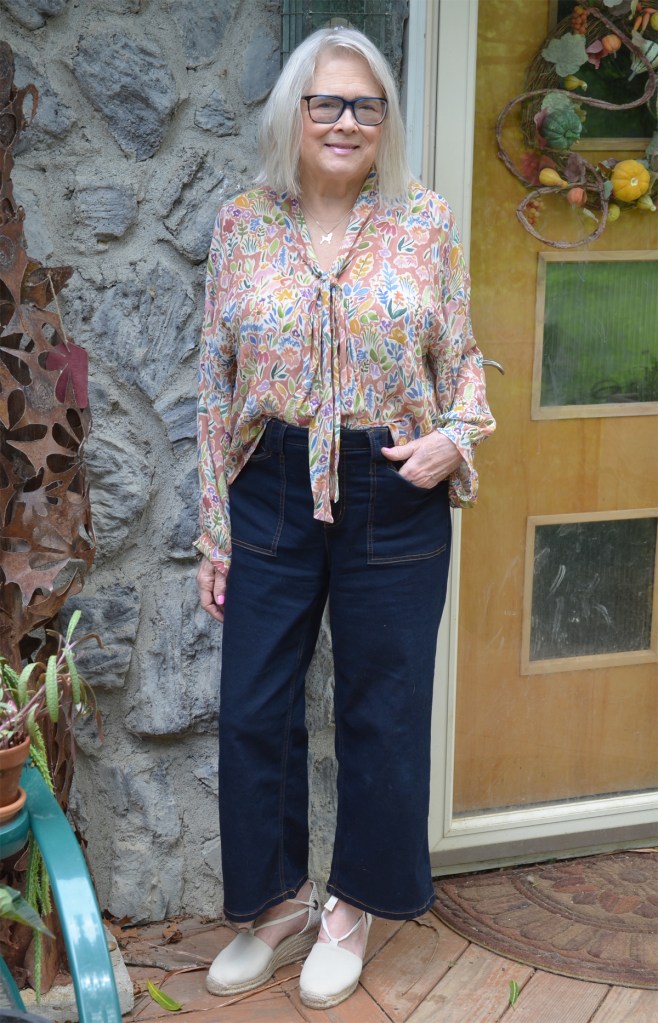
I recently finished my first Birgitta Helmersson design. This, as stated in the title, is a zero-waste pattern. Before discussing my garment, I want to review the philosophy (as I see it) behind zero-waste design.
What Exactly Is a Zero-Waste Design? I Think There Are Two Types.
One type of Zero Waste is using fabric waste from the garment industry. This would not be dead stock (unused fabric on bolts), but actual scraps. The designer “Zero Waste Daniel” has made a design career of this and I own one of his pieces. This method takes on a rather patchwork effect which can be gorgeous abstract designs if done correctly.
I am working on a project using scraps I picked up from the Alabama Chanin’s Threadway Symposium I recently attended. More about that later!
The next type of Zero-Waste is the one I just made. This method uses the fabric so that not a bit is wasted. It is a method that is an aspirational goal for the designer and seamstress.
Here is why I think this. From making a few of these designs, I find that different sizes are based on different widths of fabric. If I don’t have that exact width, it will not be zero-waste but can be termed Low-Waste and I think that is just fine. I am not going to beat myself up because I didn’t achieve the perfect Zero-Waste garment.
Isn’t it better to use something you already have in your stash than buy something new just to fit a certain criterion? Having to buy more fabric seems to me to defeat the goal. Does that make sense?
And I have made mistakes in cutting. With the top I am going to discuss, I cut the sleeves too long. I had the correct length written down, but just went on my merry way, and cut a different length which was about five inches too long! Fortunately, I was able to use some of that waste.
It’s time to get to the pattern. Oh, I guess not a pattern, because you don’t have actual patterns in zero waste. There are instructions with diagrams with measurements. You use these to draw your garment pieces on your fabric. As with most garments, I make a muslin. If it fits, I can use that as the pattern. It works.
Why I Made the ZW Tie Top
In the beginning, it had to do with my daughter Michelle. Earlier this year she purchased Birgitta Helmersson’s book ” Zero Waste Patterns.” She proceeded to create about everything in the book and I guess the enthusiasm just sort of wore off.
When visiting Brigitta Helmersson’s pattern section of her site, I found the ZW TieTop. There are about four different versions and the one that caught my attention was the shorter one with the ties in the front.
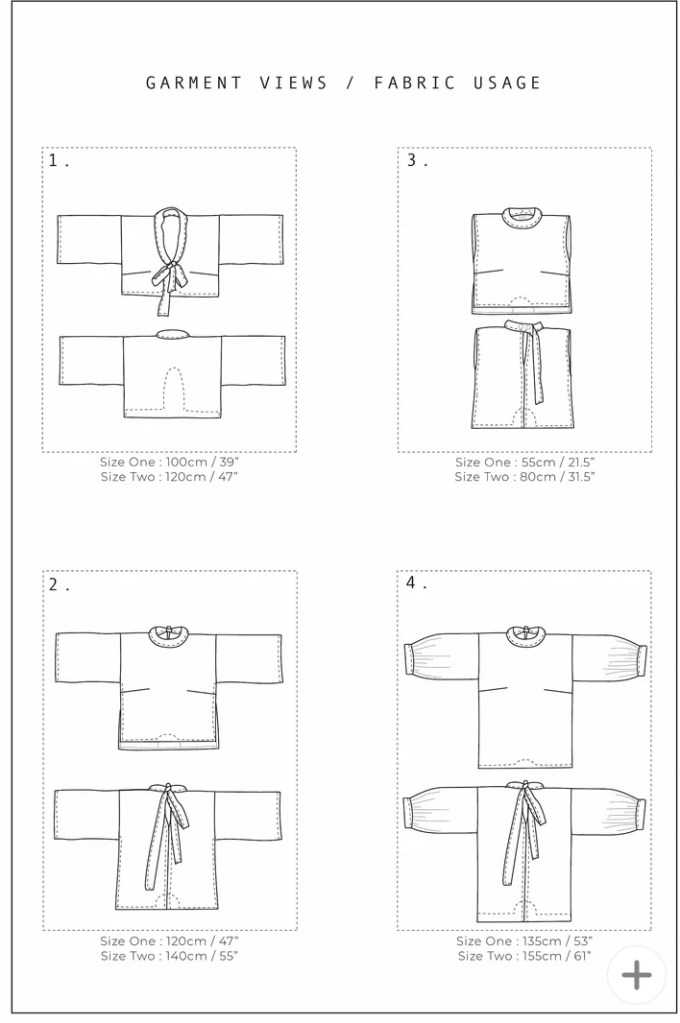
First of all, it has darts! That is an amazing thing for zero waste patterns. For someone with my physical attributes, darts have always been essential. This is where zero waste tops and I have had the most difficult relationship.
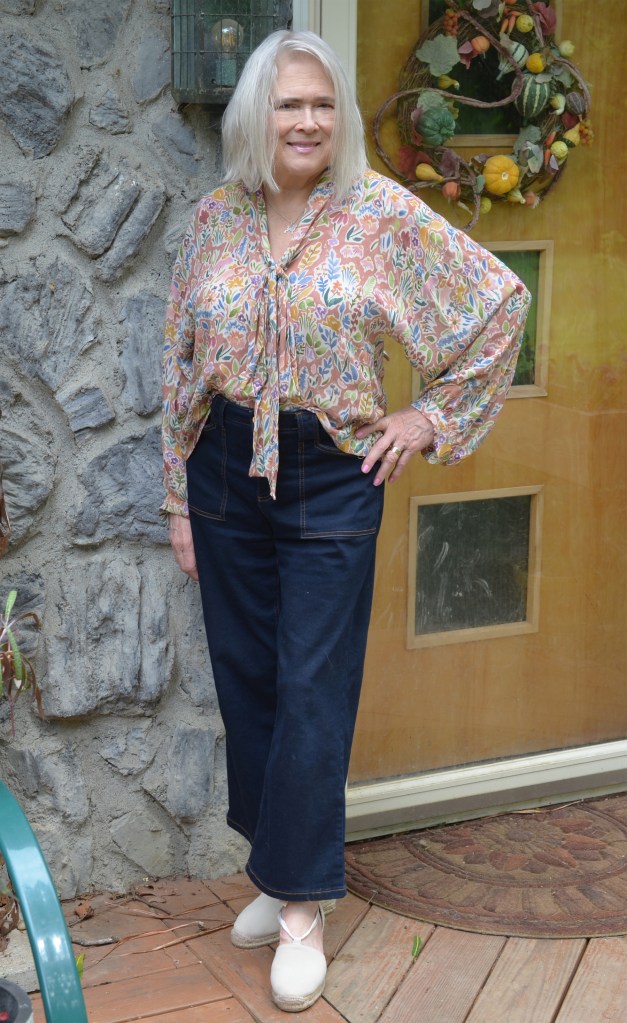
Secondly, I thought this style would look pretty great with a rayon georgette that I had in my stash.
About That Fabric
A couple of years ago, I was a member of Mood’s Insiders. I used this year to collect fabrics that were a little different from what I naturally gravitated to. This rayon georgette caught my eye. Its official title is” Mood Exclusive Dusty Rose Collection of Cuttings Viscose Georgette.”

This fabric qualified for something I wouldn’t naturally gravitate to, but the colors and abstractness appealed to me. Also, I got a good deal on it. It was $7.99 a yard and I got three yards. Now it is $23.99 a yard.
Changes-There’s Alway’s Changes
I usually do make some changes and this top is no exception.
Change #1 The top called for a seam down the front to allow for the ties to tie. This would break up my fabric pattern which I did not want so I cut it on the fold with no seam.
Change #2 Since I decided against the front seam, I needed something to let my ties tie. The answer was a placket.
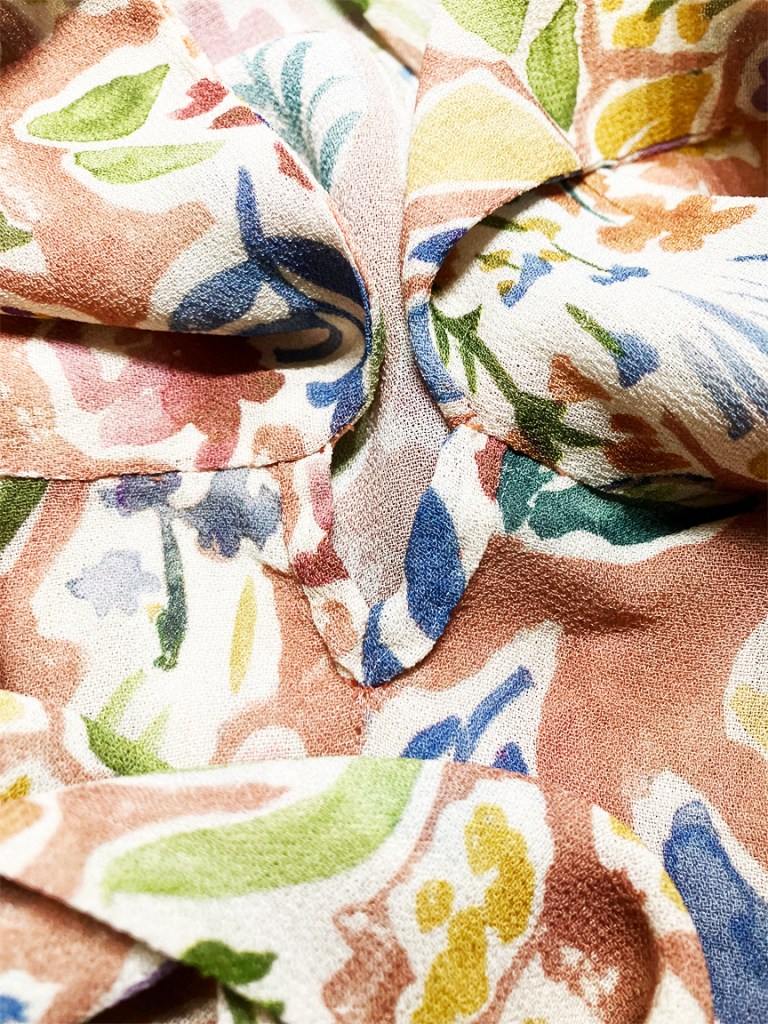
Change #3-The instructions call for serged seams. With Georgette, this was a bad idea. I used French seams throughout the garment.
Change #4 The instructions called for using the neckline cutouts as facings on the bottom of the top. I didn’t see any reason for this except that it would use up those two pieces and feel zero-waste designers usually stick these pieces on somewhere to use them up.
I thought it would disrupt the flow of the fabric and wasn’t necessary. Instead, I used some of the front neckline cutouts as a tab in the back to sew my label to. This allowed the label to be free-standing, which was an idea that I liked. This meant that some of my cutout pieces were in the waste pile.

Change #5-I wanted the long sleeves to have a band to rein them in. The idea of all that fabric swishing around my wrists and hands just didn’t appeal to me. Also, it let me make up for the earlier mistake of cutting the sleeves too long because I used those scraps for the bands. The bands are very loose and don’t encumber the movement of the sleeves.
Change #6 Since I wanted French seams, I made my seam allowance 5/8 inches rather than the usual 3/8 inches. This gave me 1/4” on the first seam and 3/8” on the final which makes a nice seam. You have to remember this while making and cutting the pieces out.
The one change that I wished I would have made is making the darts wider. The pattern width is 1 1/2 inches. If I make any of these styles again, I will double it to 3 inches.
Final Thoughts
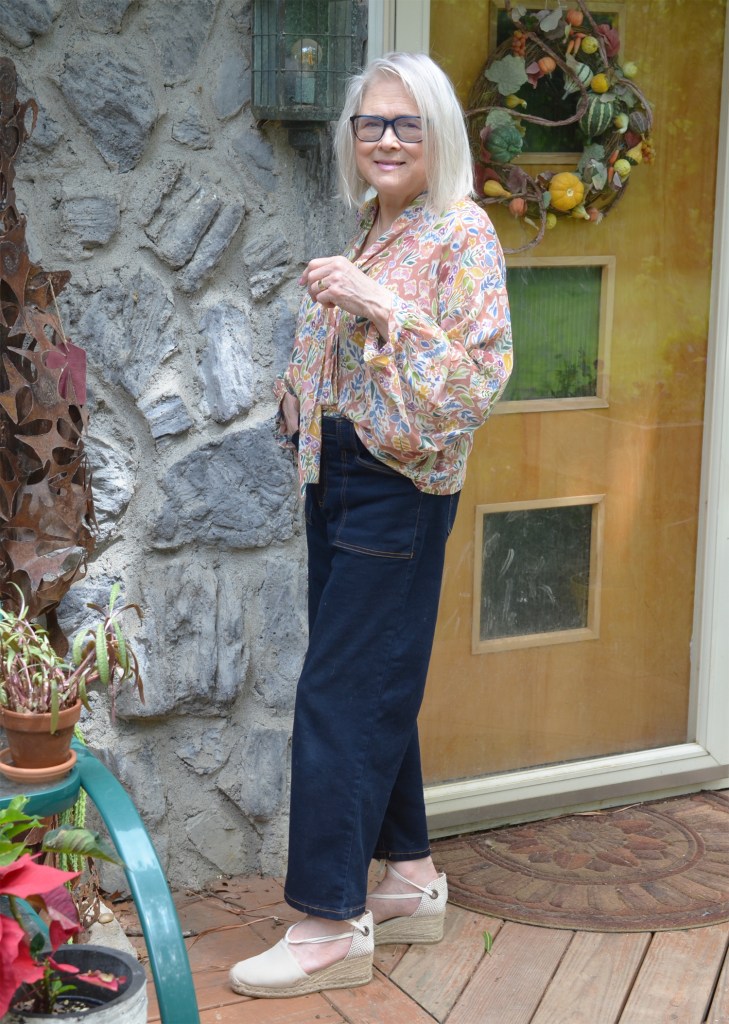
This top has a very romantic feel to it and because of that, I love wearing it. Honestly, during this past month, it has been my most worn item. The sleeves are very deep and full and just seem to float.
The rayon will make it too hot for the summer temperatures, but until then, I am definitely enjoying the look and feeling it gives me.
This was a fairly easy sew, and think it is an advanced beginner pattern. It is made up of all straight seams. I decided to hand-finish the hem and used what I consider is a slip stitch. This would probably take more time and skill than the actual sewing of the garment.
Georgette is one of the more difficult fabrics to work with. It likes to slip, slide, and fray. I took the time to hand-baste my pieces together to make life easier before sewing them on the machine. It was a slow but sure method. A light cotton or linen would work just as well and might be easier to work with.
Then comes the question if I will make this top again. The basic problem for me is this: so many patterns and not enough time! I can see making the sleeveless version. I’ve seen a couple of versions of it on Instagram and like how it looks.
That sums it up, I think. I’ll end by saying that I think everyone should try a zero waste once to experience a completely different way of sewing. You can even get a few zero-waste patterns free if you visit HERE.

The few bits that I had left. The selvages were weird and I didn’t want them in my top, so they came off. For some reason, my sleeves hung a bit uneven, so they had to be evened up. So, like I said, zero waste is an aspiration but I can live with low waste. These bits will eventually be cut up and put in my Cabbage* bag.
Originally, I had three yards of fabric. Now, I have a piece left that is 39″ x 55″. I hope to get a pair of lounge shorts from this using the Tyler Zero Waste Trouser pattern…fingers are crossed.
OK. that is it. See you soon and have a wonderful time making that stuff!
Terri
*Although the customer might provide the fabric it was a tradition that the seamstress or tailor was entitled to the extra scraps. This was called the cabbage. The term seems related to the French verb cabbase; to put in a basket.
 MeadowTree Style
Lovely as usual!
LikeLiked by 1 person
Thank you. It seems that everyother project I make now is zero or low waste.
LikeLike
Beautiful! I love French seams. They are a labor of love, but like you said, this fabric would have been difficult with the serger.
LikeLiked by 1 person
Thank You, yes French seams are a little more work but sometimes a necessity. Anyway, I hate threading my serger!
LikeLiked by 1 person
Terri, you look amazing in this top. I love the print and the zero waste aspiration. I’m always impressed by the changes you make because you know sewing so well. I haven’t done a French seam in years.
https://marshainthemiddle.com/
LikeLiked by 1 person
Hello, Marsha! It has turned out to be one of my favorite items this last month. Zero Waste is a different kettle of fish; no actual pattern pieces. Have a great week!
LikeLike
I love the concept. It looks amazing and so do you!
LikeLiked by 1 person
Thank you! I am fascinated by the zero-waste concept. It is as old as the Bronze Age but some of the new designs look sophisticated.
LikeLiked by 1 person
It’s fairly new to me and I am fascinated by it. Reading your blog was the first time I heard about zero waste designers. I can’t wait to learn more. I was inspired by your blog. Thank you for that
LikeLike
Such a beautiful top! The fabric and the design are gorgeous. You did a wonderful job with this zero waste design. And thank you for explaining the methodology and inspiration.
LikeLiked by 1 person
Thank you, that is why I blog-to share information.
LikeLike